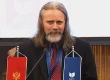

At the 24th International Conference of the Montenegrin Sports Academy (CSA), which will be held in Budva, Professor Dr. Robert Trybulski will participate as a guest researcher whose work connects modern sports science, rehabilitation, and the clinical application of training. His research focuses on innovative training and recovery methods, particularly the application of Blood Flow Restriction (BFR) training as a tool for improving physical performance, recovery, and health outcomes across different populations.
Dr. Trybulski is the author and co-author of several scientific papers published in international journals in the fields of sports science and kinesiology, including the British Journal of Sports Medicine, European Journal of Applied Physiology, and the Journal of Functional Morphology and Kinesiology. His research examines the effects of blood flow restriction during training on muscular and vascular adaptations, as well as the potential applications of this method in rehabilitation, elite sports, and among individuals with metabolic diseases such as type 2 diabetes.
What his research focuses on
In his presentation, Dr. Trybulski will present the results of a research program dedicated to understanding how BFR training affects not only the muscles directly exposed to restricted blood flow but also distant muscle groups, indicating the presence of systemic neuromuscular and vascular mechanisms.
His work includes several research approaches, including randomized controlled trials and experimental protocols involving repeated ischemic stimulation. The results show that BFR training can significantly contribute to increases in muscle strength and function, as well as accelerate recovery after intense physical effort.
A special part of the research focuses on the clinical application of BFR training, where it has been shown that this low-load method can improve insulin sensitivity, glucose metabolism, and certain cardiovascular parameters in individuals with type 2 diabetes.
Broader significance of the research
The central message of his work is that BFR training should not be viewed only as a method for increasing muscle mass, but as a complex physiological stimulus that can affect the entire system – from muscle function and vascular adaptations to recovery processes and metabolic health.
His presentation in Budva will provide an important contribution to understanding how modern training methods can connect elite sport, rehabilitation, and medical practice, opening space for new approaches to optimizing performance and preserving the health of both athletes and the general population.