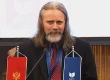

A distinguished professor from the State University of New York at Brockport (founded in 1835), from the Department of Kinesiology, Sport Studies and Physical Education, believes that the growing international reputation and positioning of the Montenegrin Sports Academy conference in Budva confirm its increasing importance and send a clear message that sport must unite science, excellence, and ethics.
Budva Brings Together the World of Sports Science:
Without Ethics, There Can Be No Elite Sport
From April 16 to 19, Budva will once again become a regional and international center of sports science, as the Montenegrin Sports Academy organizes its 24th international conference entitled “Sports Science, Medicine & Health – Innovations, Achievements, Synergy and Challenges – A Bridge to the Future of Excellence in Sports.” This scientific gathering has been steadily strengthening and expanding its international reputation year after year, bringing together scientists, researchers, and sports professionals from a large number of countries and institutions.
On the eve of the conference, Professor Robert C. Schneider from SUNY Brockport (1835) in New York speaks about the importance of such meetings, the challenges of modern sport, the role of ethics in the sports system, and the opportunities Montenegro has for the further development of sport.

The Conference in Budva Is Becoming an Important International Meeting Point for Sport and Science
Professor Schneider, you are coming to the 24th International Conference of the Montenegrin Sports Academy in Budva. How do you see the significance of this event?
Such conferences have a special value because they bring together scientists, teachers, researchers, and professionals from different fields of sport in one place. When you have a gathering that connects sports science, medicine, health, education, and practice, then we are talking about a serious platform for the exchange of ideas that can have a long-term impact. It is especially important when such an event goes beyond regional boundaries and becomes a space for international cooperation and shared reflection on the future of sport.
The organizers have announced, and judging by the submitted papers, the names of the researchers, and the destinations they are coming from, that this year’s conference will surpass all previous ones in both scale and quality. How important is that for the international sports and academic community?
That is a very important signal. When a conference records growth in the number of submitted papers, authors, and participating institutions, it shows that there is trust in its academic quality and the relevance of the topics it addresses. Such development indicates that Budva and Montenegro, this year, are becoming a recognized meeting place for science and sport. This is important not only for the organizers, but also for the wider academic community, because it confirms that a serious international forum is being built here for reflecting on the key challenges of modern sport.
This year’s conference theme places emphasis on innovation, achievements, synergy, and challenges. How important is this interdisciplinary approach today?
It is fundamentally important. Today, sport can no longer be viewed only through results, training, or competition. Sport is at the same time a matter of health, education, governance, ethics, social responsibility, and community development. If we want excellence in sport, it must be based on cooperation between science, medicine, educational institutions, and sports organizations. That is why conferences that promote an interdisciplinary approach are especially important for the future of sport and its continued progress.
What do you expect from your participation in Budva?
First of all, I expect a high-quality dialogue. It is always valuable to me when I have the opportunity to speak with colleagues from different countries and different sports systems. My interest is particularly focused on how education in sport management can remain relevant at a time when the sports industry is changing rapidly. I believe that Budva will be an excellent place to exchange experiences on how to educate professionals who can respond to the needs of modern sport.
Without ethics, sport loses its credibility
Ethics in sport and the moral governance of sports organizations hold a special place in your academic work. Why are these topics so important today?
Because sport has an enormous influence on people, especially young people. Sport can build character, solidarity, and responsibility, but it can also create serious problems if it loses its moral orientation. When we speak about ethics in sport, we are not referring only to major scandals, but also to everyday decisions: how athletes are treated, how decisions are made in clubs and federations, how the pressure for results is managed, and how issues of equality and respect are addressed. Moral governance is not an addition to sport – it is the foundation of its credibility. It is a universal principle of sport.
You often speak about the need for sport management to adapt to the real needs of the sports industry. What does that mean in concrete terms?
It means that education must not lag behind practice. Today, the sports industry is developing in many directions — from professional and school sport to recreation, marketing, event organization, and digital content. That is why study programs must prepare students not only for one narrow profession, but for a wide range of jobs and challenges. A good model is one that combines a strong foundation in sport management with the opportunity for students to develop specific knowledge according to their own interests and the needs of the market.
In the work of researchers, the idea of a curriculum that can endure despite changes in the economy and society is often mentioned. How can this be achieved?
The key is balance. It is necessary to have core subjects that remain permanently important — management, ethics, organizational behavior, communication, research, leadership, finance, and sports law — while at the same time leaving room for flexibility and specialization. In this way, students gain knowledge that is applicable across different sectors of sport, while through internships, field experience, and international mobility they can develop a profile that matches their professional goals. There is no need to change the entire curriculum every time a new trend appears; what is needed is a program built on a solid foundation and broad enough to respond to change.
In your book on sports ethics, you deal with specific dilemmas. What do you see today as the greatest challenges?
The challenges are numerous and highly complex. They include issues of doping and various forms of performance enhancement, violence in sport, racial and gender discrimination, the influence of parents in youth sport, ethical dilemmas related to digital and online environments, as well as the pressure for results that sometimes pushes athlete welfare into the background. My view is that sport must not lose its competitive spirit, but it must also preserve its moral integrity. This means that success must never be more important than the human being.
How important is it that ethics in sport be studied not only theoretically, but also in practice?
It is extremely important. Ethical decision-making is learned through concrete situations. That is why I have always insisted on case studies, practical dilemmas, and decision-making models. People in sport must be prepared to recognize a problem in real time, weigh the consequences, and act responsibly. Ethics is not an abstract discipline; it is an everyday tool for good governance and effective leadership of people and organizations.
Montenegro has a sporting identity and room for further progress
How can your views on ethics, management, and education be applied in the context of Montenegro?
Montenegro has a very interesting and specific sporting context. It is a country with a strong sporting identity, a great passion for sport, and, relative to its size, visible international results in several disciplines. Precisely for that reason, it is important that sports development be accompanied by the proper development of sports governance, professional education, and institutional culture. In smaller systems, there is often the advantage of faster communication and easier cooperation between the academic community, sports federations, and state institutions. If that advantage is used well, it is possible to build a very efficient and modern sports system.
What should, in your opinion, be one of Montenegro’s priorities in the coming period?
One of the priorities should certainly be the development of human resources. The quality of a sports system does not depend only on talent on the field, but also on the quality of the people who plan, lead, organize, and educate. This implies investment in academic programs, professional development, international cooperation, and connecting education with the real needs of the sports sector. When you have educated and ethically responsible people in sports structures, you create the conditions for sustainable progress. Of course, this also implies proper conditions for training and competition.
How important are international gatherings such as this one in Budva for a small country like Montenegro?
They are very important, perhaps even more important than for large systems. Such gatherings make it possible not merely to import knowledge passively, but for Montenegro to become an active participant in the international exchange of ideas. This is an opportunity for local experts to present their work, for students to see what modern scientific and professional communication looks like, and for new partnerships to develop. The conference in Budva can also have a broader significance: academic, professional, reputational, and even developmental, because it connects sport, science, and the country’s international visibility.
As people from this region, we have learned that Montenegro is recognized for sporting talent and a strong sporting tradition. What is your view on that, and what is needed for that potential to be even better systemically valued?
The talent of Montenegrin athletes is recognized within the international sports community as well. What is needed is to align talent with structure. This means that natural sporting potential should be supported by quality education, clear development strategies, ethical governance, and long-term planning. Success should not depend exclusively on individual generations or exceptional individuals, but on a system capable of continuously producing quality — both on the field and in the governance of sport. When you combine tradition, knowledge, international cooperation, and clear standards of governance, you get a very strong foundation for progress.
What message would you like to send, ahead of your arrival in Montenegro, to the conference participants and the sporting public in Montenegro?
My message is that sport should be viewed as a space of excellence, but also of responsibility. Science, education, and practice must work together. Conferences such as this one organized by the Montenegrin Sports Academy in Budva show that there is a strong will to develop sport in a serious, internationally relevant, and ethically grounded way. That is highly encouraging. I believe that Montenegro has all the prerequisites to continue strengthening its role in the regional and European sporting arena. My experience with the work of the Montenegrin Sports Academy has been fascinating, especially in terms of the ideas and commitment dedicated to the further development of sport.
What Will Professor Robert Schneider Speak About at the Conference in Budva?
Professor Schneider will deliver a plenary lecture entitled “Using Sport Management to Support Human Needs as Artificial Intelligence Advances,” in which he will discuss how the rapid development of artificial intelligence is reshaping everyday life, education, and sport, while also raising the question of whether technology is displacing the experiences human beings need for personal development. Starting from the idea that fundamental human needs are not fulfilled solely through results, but also through real experience, personal effort, and autonomy, Schneider will place particular emphasis on the risks of excessive reliance on AI.
His presentation will also focus on the role of higher education, especially sport management, in preserving practical, experiential learning and fostering independence among young people. As announced, he will address three key areas of action: preventing excessive dependence on artificial intelligence, strengthening experiential learning in education, and increasing sport-related experiences within the community. The central message of his lecture is that sport, education, and direct human experience must remain essential pillars in a time of accelerated technological development.